POLITICS
Venezuela’s parliament has passed a law granting amnesty to political prisoners — while in practice banning the return of opposition leaders to the country. It is no coincidence that Nobel laureate María Corina Machado calls Delcy Rodríguez, who has been running the country ever since Nicolás Maduro was seized by the Americans on Jan. 3, “an integral part of the cartel,” “the architect and overseer of the torture system,” and “the main link between Russia, Iran, and Cuba.” Nevertheless, the preservation of power in the hands of the “old guard” appears to suit the Trump administration just fine. From the very first days after Maduro’s abduction, the White House has consistently sought to restore American companies’ access to Venezuela’s oil industry while postponing democratic reforms to an indefinite future.
Three billion dollars for the capture of Maduro
Rapid seizure of oil
Venezuela moves to accommodate the U.S.
Russia is being pushed out — but not entirely
Why does America need Venezuelan oil?
Instead of democracy
Rodriguez and Machado
Machado remains resolute
Political prisoners: manipulation and reality
The year 2026 began with a shock: on Jan. 3, U.S. special forces captured Venezuelan President Nicolás Maduro and his wife and flew them out of the country to stand trial in the United States on charges of narco-terrorism. Many Latin American media outlets ironically characterized this seemingly flawless military operation as Maduro’s “extraction.”
Prior to the move, the U.S. had been amassing enormous military power off the coast of Venezuela — to the cost of between $2 billion and $3 billion, according to plausible estimates. Maduro’s removal was celebrated by the Venezuelan domestic opposition, as well as by many of the 8 million emigrants who have fled dictatorship and poverty in recent years. Many of those cheering hoped for a swift transition to democracy.
However, it is unclear what was in it for the Trump administration. Was the U.S. president interested in a change of regime in Venezuela, or was it enough for him to present Maduro’s capture to his voters as a success in the fight against drug trafficking ahead of the upcoming midterm elections?
Some experts point out that the drugs passing through Venezuela are disproportionately destined for the European market, rather than the American one, meaning Maduro’s removal will hardly reduce the flow of narcotics to the United States. In addition, it will not be easy to prove that Maduro actually led the Cartel de los Soles, as alleged by the prosecution. The trial promises to be lengthy, and there has been no substantive news about the proceedings for more than a month. The next hearing has been moved from Mar. 17 to Mar. 26 at the request of the U.S. Attorney’s Office for the Southern District of New York.
Attention is now focused on the fate of Venezuela itself. The past six weeks have made it clear that the remaining members of the Maduro regime are trying to keep their political positions by accommodating American interests in the oil sector, privatizing firms that were nationalized by Maduro’s predecessor Hugo Chávez and opening access to American oil companies on favorable terms. Official Washington has stated that its top priority is to stabilize the situation in Venezuela and rebuild its economy. Democratization, free elections, and other reforms have been postponed for at least two to three years, which clearly runs counter to the hopes of the Venezuelan opposition.
A left-wing political ideology based on the ideas and practices of Hugo Chávez, president of Venezuela from 1999 to 2013.
An indispensable role in Venezuelan oil production belongs to a light petroleum product called naphtha. Venezuelan extra-heavy crude is too viscous to flow through pipelines on its own, which is why naphtha is used as a diluent, turning the extra-heavy crude into the so-called Merey grade — a Venezuelan oil blend suitable for transportation and export. To maintain production levels, Venezuela needs to import about 80,000 to 90,000 barrels of naphtha per day. It is brought into the country and often blended on site with crude oil, helping move it to export terminals such as the port of José.
Washington’s priority is to stabilize the situation in Venezuela and rebuild its economy, taking the position that democratization can wait
Trump quickly offered up the objectives of the operation. At a dedicated press conference on Jan. 3, he declared that American oil companies would invest billions of dollars in Venezuela to make production profitable again.
The first steps in that direction were taken quickly. On Jan. 7, Trump announced preparations for an unprecedented deal between the United States and Venezuela’s interim authorities under which Washington would receive up to 50 million barrels of high-quality Venezuelan oil that had been under sanctions and blocked on tankers and in storage due to export restrictions. “This Oil will be sold at its Market Price, and that money will be controlled by me, as President of the United States of America, to ensure it is used to benefit the people of Venezuela and the United States!” Trump wrote on TruthSocial.
On Jan. 9, the White House published Trump’s executive order declaring a national emergency to protect Venezuelan oil revenues held in U.S. Treasury accounts from seizure or legal claims. The order confirms that these funds remain the property of Venezuela despite the fact that they are currently controlled by the United States.
Jon Stewart mocked Trump for his failure to even pretend there was a “higher purpose” behind the raid, facetiously claiming that, “By safeguarding these oil revenues, President Trump is promoting stability in Venezuela while advancing America First objectives: stopping illegal immigration, blocking deadly narcotics, and countering malign foreign influence.”
At a White House meeting with the heads of major oil companies on Jan. 10, Trump proposed that they invest $100 billion in Venezuela. Chevron Vice Chairman Mark Nelson said the company was ready to expand its presence in Venezuela, while ExxonMobil CEO Darren Woods was not thrilled with the prospect but expressed hope that Venezuela would become more attractive for investment.
The difference in positions is explained by the fact that Chevron remained in the country, despite sanctions, albeit while facing some interruptions and restrictions. ExxonMobil, by contrast, left Venezuela after Hugo Chávez nationalized its assets in 2007. After years of litigation, an international arbitration tribunal ordered Venezuela to pay the company $908 million (a tenth of ExxonMobil's claims). As a result, ExxonMobil is now taking a much more cautious stance.
After the meeting, U.S. Energy Secretary Chris Wright said that Chevron sees an opportunity to increase oil production in Venezuela by 50% over the next 18 to 24 months.
A left-wing political ideology based on the ideas and practices of Hugo Chávez, president of Venezuela from 1999 to 2013.
An indispensable role in Venezuelan oil production belongs to a light petroleum product called naphtha. Venezuelan extra-heavy crude is too viscous to flow through pipelines on its own, which is why naphtha is used as a diluent, turning the extra-heavy crude into the so-called Merey grade — a Venezuelan oil blend suitable for transportation and export. To maintain production levels, Venezuela needs to import about 80,000 to 90,000 barrels of naphtha per day. It is brought into the country and often blended on site with crude oil, helping move it to export terminals such as the port of José.
Chevron sees an opportunity to increase oil production in Venezuela by 50% over the next 18 to 24 months
Chevron has long enjoyed a special position in Venezuela, and its leadership has found common ground with the regime. After the company received a new U.S. license in July 2025, Maduro said, “Chevron has been present in Venezuela for 102 years, and I hope it will continue to operate here without any problems for another 100 years.” It appears that Maduro’s hopes may come true — but without him being there to witness it.
The first practical steps followed shortly thereafter. As the main partner of Venezuela’s state energy company PDVSA, Chevron chartered a dozen tankers to increase shipping volumes and draw down the oil inventories that had accumulated since December. At the time, U.S. sanctions hit Venezuela’s exports hard, with millions of barrels of oil frozen in onshore storage tanks and on vessels.
The four Chevron–PDVSA joint ventures produce roughly 245,000 barrels of heavy crude per day. This oil, which accounts for one-third of the country's total production (currently standing at roughly 800,000 bpd), is in demand at refineries along the U.S. Gulf Coast.
The historical peak of Venezuela's oil production in the late 1990s came in at around 3.5 million barrels per day. However, as a result of nationalization, U.S. sanctions, underinvestment, and infrastructure deterioration, by 2020 output had fallen to 400,000 bpd. It is no coincidence that Chevron’s planned expansion of output will be financed through cash flow from existing operations rather than new capital investments.
On Jan. 28, Chevron confirmed that it would increase Venezuelan oil exports to the United States in March to about 300,000 bpd, compared with 100,000 bpd in December and 230,000 bpd in January. Chevron shares (CVX) rose 5.6% immediately after Maduro’s capture, while shares of U.S. oil service companies and refiners jumped 9–10%, providing grounds for optimism about the future of Venezuela’s oil industry.
The new Venezuelan authorities quickly took reciprocal steps. On Jan. 29, the country's National Assembly unanimously approved the second reading of a draft reform of the Hydrocarbons Law. The bill will allow foreign and domestic companies to develop oil fields without state control, opening the sector to private capital for the first time since the early years of Hugo Chávez’s rule. This marks a major transformation of the Venezuelan model, which for two decades preserved the monopoly of the state oil company PDVSA as the industry’s main player and sole operator.
A left-wing political ideology based on the ideas and practices of Hugo Chávez, president of Venezuela from 1999 to 2013.
An indispensable role in Venezuelan oil production belongs to a light petroleum product called naphtha. Venezuelan extra-heavy crude is too viscous to flow through pipelines on its own, which is why naphtha is used as a diluent, turning the extra-heavy crude into the so-called Merey grade — a Venezuelan oil blend suitable for transportation and export. To maintain production levels, Venezuela needs to import about 80,000 to 90,000 barrels of naphtha per day. It is brought into the country and often blended on site with crude oil, helping move it to export terminals such as the port of José.
Venezuela’s new hydrocarbons law will allow foreign and domestic companies to develop oil fields without state control
National Assembly Speaker Jorge Rodríguez — the brother of acting president Delcy Rodríguez — stressed the need to attract foreign investment, telling lawmakers, “Oil underground is useless; it must be turned into schools and housing for young people.”
Critics say this legislative reform may conflict with Venezuela’s constitution, which reserves key oil industry activities for the state. As a result, numerous additional laws adopted under previous governments would need to be repealed in order for the reforms to actually take effect.
On Feb. 2, the U.S. Treasury’s Office of Foreign Assets Control (OFAC) issued three new general licenses allowing American companies to supply Venezuela with equipment and technology to increase oil and gas production. But the licenses come with a condition: the recipients must not cooperate with sanctioned countries, meaning individuals and entities from Russia, Iran, North Korea, and Cuba.
Undoubtedly, the restrictions will hit Russian investments in Venezuela, which are estimated at $17 billion and include stakes in oil fields. The United States has already fully replaced the naphtha that Russia supplied to Venezuela to dilute the country’s extra-heavy crude.
Rosneft opened five joint ventures with PDVSA in the mid-2010s, and in 2020, when the Venezuelan company came under sanctions, Rosneft’s assets were transferred to a newly created entity — Roszarubezhneft JSC. A little over a week after Maduro’s “extraction,” the company stated that it intends to continue fulfilling its obligations.
On Feb. 10, 2026, Petromonagas, a joint venture between Venezuela’s PDVSA and Russia’s Roszarubezhneft, resumed oil production that had been halted due to U.S. sanctions. However, the question remains unresolved as to who will own the Russian share of the oil being sold, given that Russia holds a 40% stake in the joint venture.
Under the new law, foreign investors can enter into special service contracts with PDVSA for output sharing and receive compensation as a percentage of oil output, thereby improving conditions for foreign investors. At the same time, the U.S. Treasury Department has codified the aforementioned move to prohibit transactions involving persons from Russia, China, Iran, North Korea, and Cuba. Resolving this conflict may require recourse to international arbitration, as provided for under the new Venezuelan law.
Undoubtedly, the process of privatizing Venezuela’s oil sector and reviving its petroleum industry will be lengthy and complicated, and much will depend on the country’s political climate. Under the combined reigns of Chávez and Maduro, Venezuela dropped to 21st place in the world in terms of production volume.
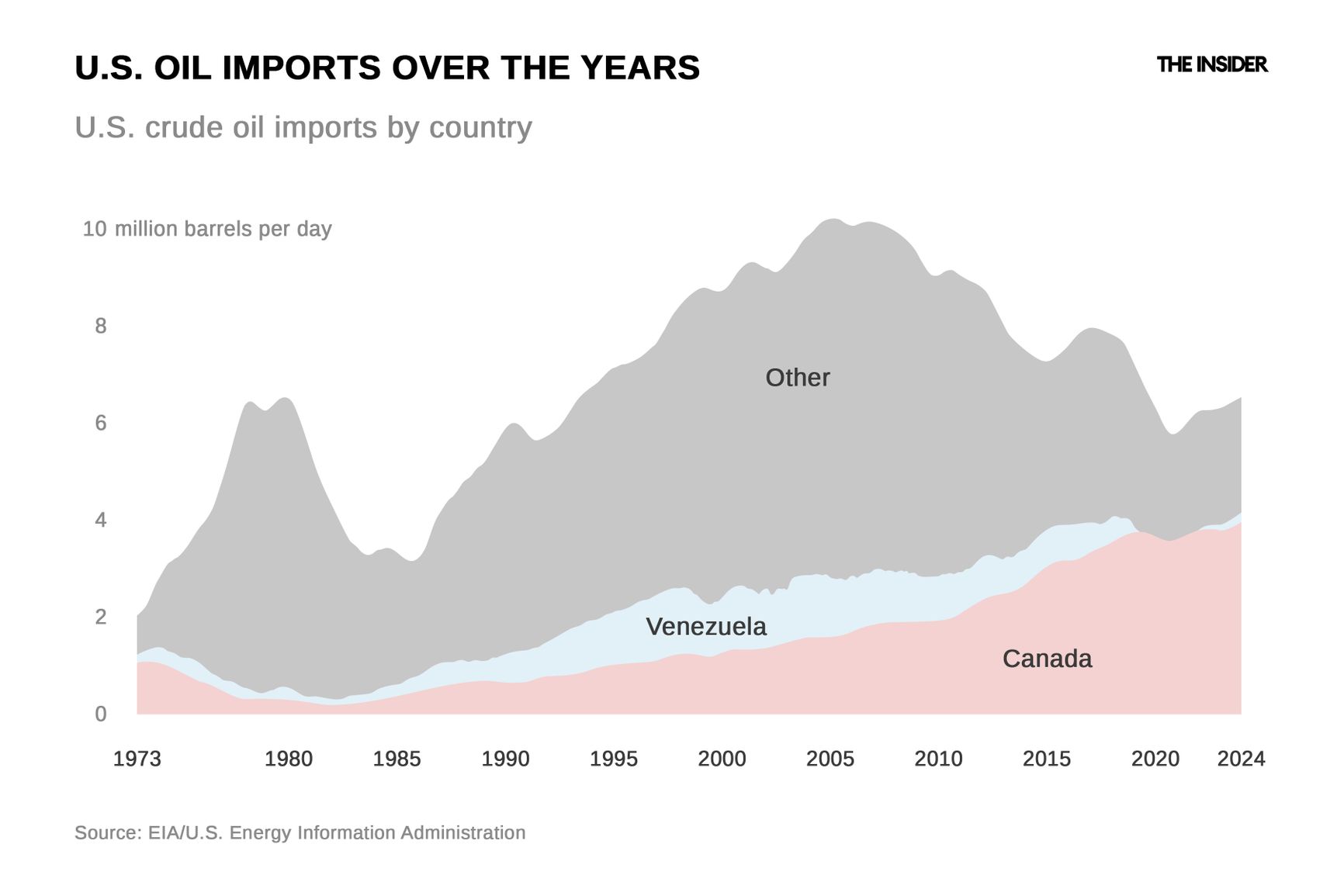
Despite the complications, America is interested in Venezuelan oil primarily because most U.S. refineries in Texas and Louisiana are designed to process the type of heavy crude that Venezuela produces. Although the shale revolution made the U.S. a net exporter of oil — mainly light crude — it still imports hundreds of thousands of barrels per day of other sorts, mostly from Canada. Venezuela’s share in recent years has fallen to zero, and there is a rationale for restoring it given that Venezuela holds the world’s largest reserves of heavy oil.
A left-wing political ideology based on the ideas and practices of Hugo Chávez, president of Venezuela from 1999 to 2013.
An indispensable role in Venezuelan oil production belongs to a light petroleum product called naphtha. Venezuelan extra-heavy crude is too viscous to flow through pipelines on its own, which is why naphtha is used as a diluent, turning the extra-heavy crude into the so-called Merey grade — a Venezuelan oil blend suitable for transportation and export. To maintain production levels, Venezuela needs to import about 80,000 to 90,000 barrels of naphtha per day. It is brought into the country and often blended on site with crude oil, helping move it to export terminals such as the port of José.
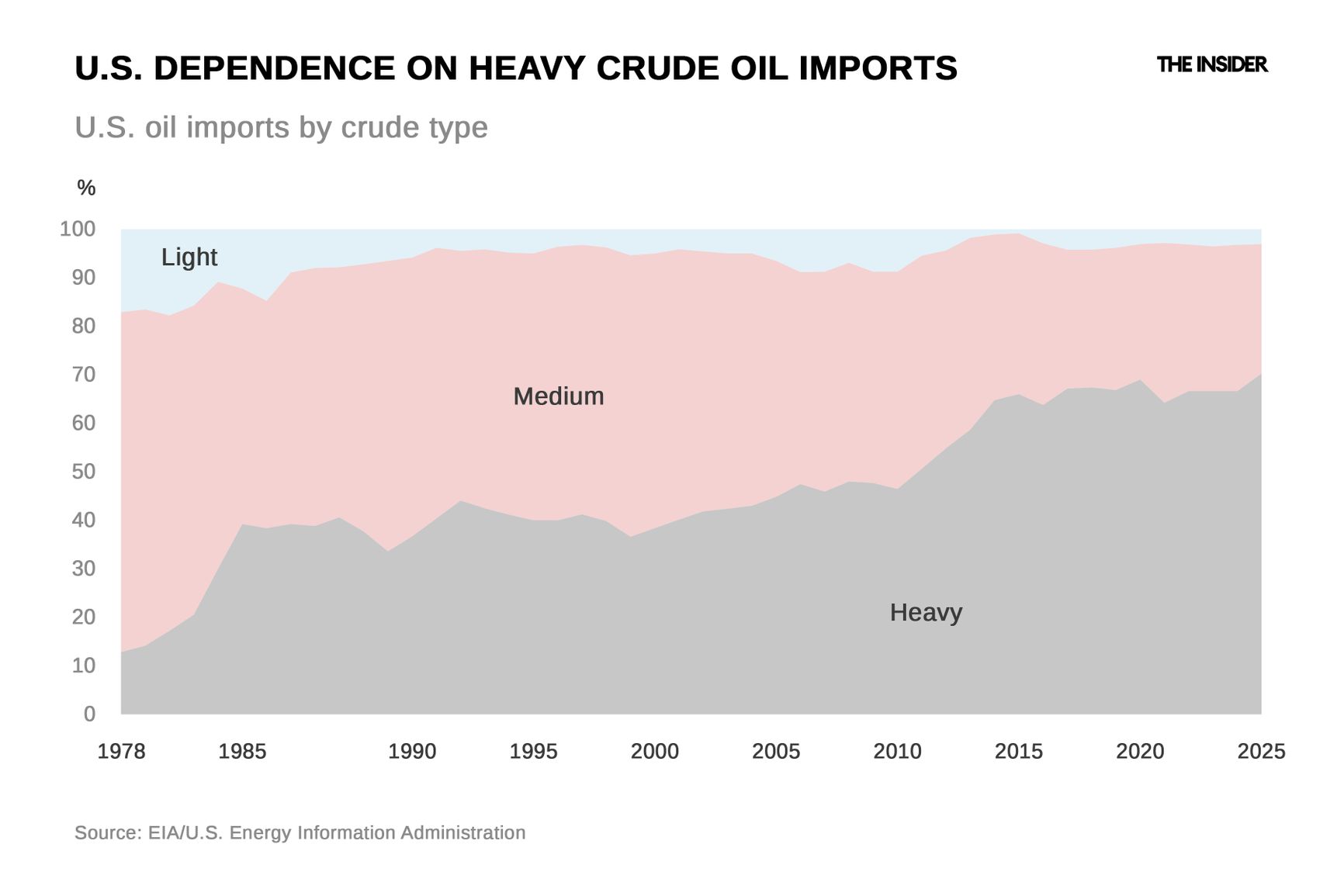
The share of heavy crude imports in the U.S. rose from 19% in 1978 to 70% by 2024, meaning America has an economic interest in diversifying its suppliers, regardless of the regime in power in Venezuela.
A left-wing political ideology based on the ideas and practices of Hugo Chávez, president of Venezuela from 1999 to 2013.
An indispensable role in Venezuelan oil production belongs to a light petroleum product called naphtha. Venezuelan extra-heavy crude is too viscous to flow through pipelines on its own, which is why naphtha is used as a diluent, turning the extra-heavy crude into the so-called Merey grade — a Venezuelan oil blend suitable for transportation and export. To maintain production levels, Venezuela needs to import about 80,000 to 90,000 barrels of naphtha per day. It is brought into the country and often blended on site with crude oil, helping move it to export terminals such as the port of José.
While a stable political environment is crucial for investment, Venezuela has little to offer in this regard. Many Venezuelans who welcomed Maduro’s removal had hoped for regime change. Even before the events of Jan. 3, the United States had not recognized Maduro as a legitimate president, instead endorsing opposition candidate Edmundo González Urrutia, who received two-thirds of the votes in the 2024 elections before the count was halted. Nobel laureate opposition leader María Corina Machado won 80% of the vote in the primaries but was barred by the regime from running in the election.
Nevertheless, prospects for democratization remain vague. Beyond idle speculation that Trump cannot forgive Machado for receiving the Nobel Peace Prize (which she later symbolically “re-gifted” to Trump), there are more serious and pragmatic reasons why Washington has lent its support to Delcy Rodríguez, Maduro’s vice president, rather than on legitimately popular opposition leaders: Rodríguez has pledged to rapidly open up the economy while maintaining political control.
In addition, Venezuelan and Spanish media reported in January that U.S. intelligence agencies believe Machado would not be able to successfully govern the country, as she lacks strong ties to the security services and the oil sector. Rodríguez, meanwhile, headed Venezuela’s SEBIN intelligence service, the Ministry of Economy, and the Ministry of Oil while fulfilling her role as Maduro’s chief political ally.
The country’s business community has welcomed Rodríguez’s rise to power. Business elites have nicknamed her “Delcyping,” in reference to Deng Xiaoping, suggesting that she will pursue a model similar to China’s: more capitalism and market openness, but under the political control of the existing system. If Rodríguez ensures stability and protects their businesses, the country’s economic elite is not concerned about much else.
A left-wing political ideology based on the ideas and practices of Hugo Chávez, president of Venezuela from 1999 to 2013.
An indispensable role in Venezuelan oil production belongs to a light petroleum product called naphtha. Venezuelan extra-heavy crude is too viscous to flow through pipelines on its own, which is why naphtha is used as a diluent, turning the extra-heavy crude into the so-called Merey grade — a Venezuelan oil blend suitable for transportation and export. To maintain production levels, Venezuela needs to import about 80,000 to 90,000 barrels of naphtha per day. It is brought into the country and often blended on site with crude oil, helping move it to export terminals such as the port of José.
Business leaders call Rodríguez “Delcyping,” drawing an analogy with Deng Xiaoping, believing she aims to implement a Chinese-style model of capitalism under rigid state control
At a Jan. 28 hearing of the Senate Foreign Relations Committee, U.S. Secretary of State Marco Rubio clearly defined the goals of the operation to extract Maduro from Venezuela, stressing that the status quo ante presented a “strategic risk” for the U.S. As the top priority going forward, Rubio named stability, stating that civil war had been avoided through “respectful but very direct and honest conversations with the people who today control the elements of that nation, meaning the law enforcement and the government apparatus.”
The second goal — or second phase — is Venezuela’s economic recovery, after which a transition period and democratization can begin. “That’s the end state that we want: free, fair, prosperous, and friendly Venezuela. We’re not going to get there in three weeks. It’s going to take some time,” Rubio explained.
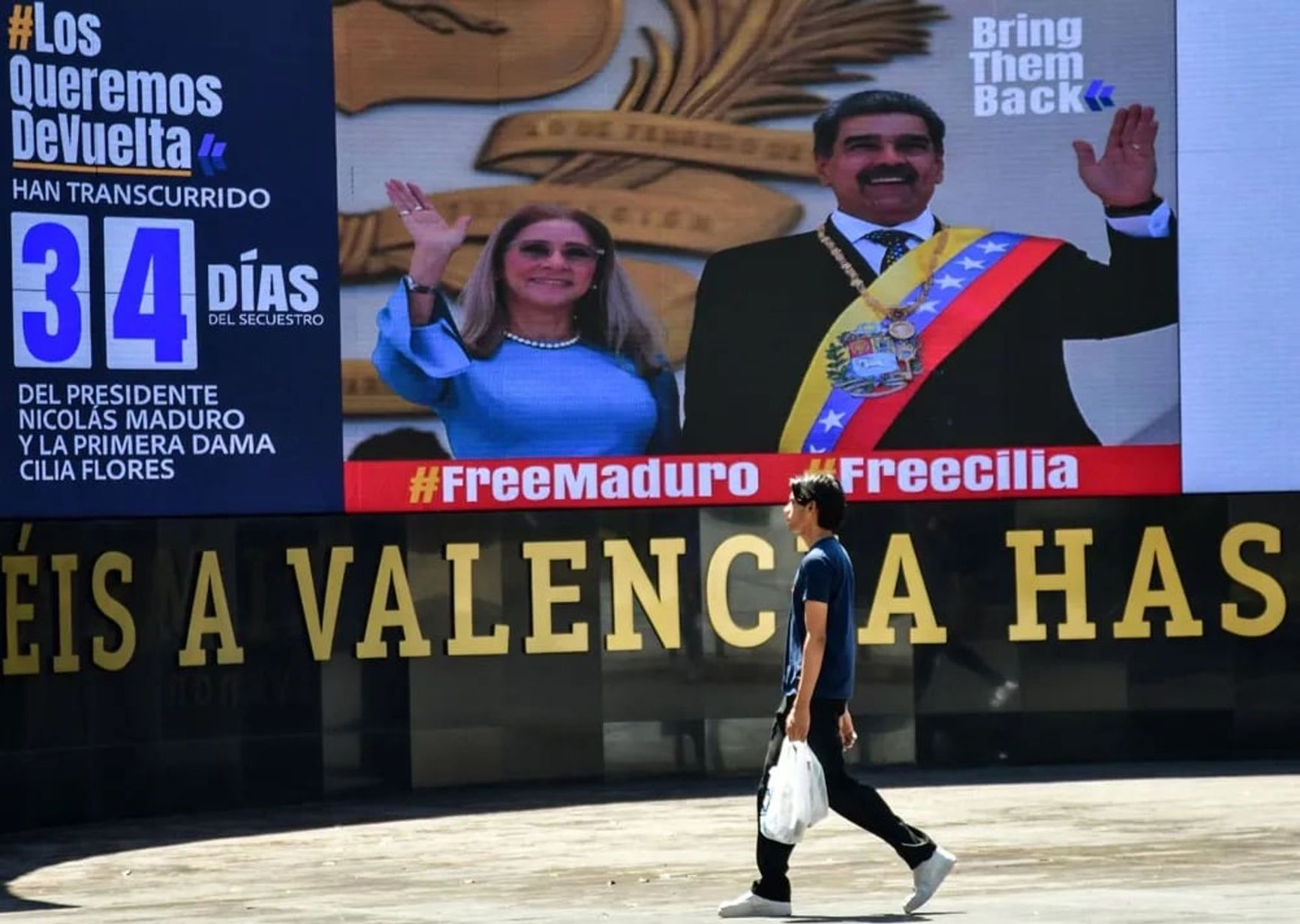
Caracas is now covered with billboards featuring Nicolás Maduro and his wife Cilia Flores under the concise slogan: “We want them back,” suggesting that the old regime remains largely intact.
A left-wing political ideology based on the ideas and practices of Hugo Chávez, president of Venezuela from 1999 to 2013.
An indispensable role in Venezuelan oil production belongs to a light petroleum product called naphtha. Venezuelan extra-heavy crude is too viscous to flow through pipelines on its own, which is why naphtha is used as a diluent, turning the extra-heavy crude into the so-called Merey grade — a Venezuelan oil blend suitable for transportation and export. To maintain production levels, Venezuela needs to import about 80,000 to 90,000 barrels of naphtha per day. It is brought into the country and often blended on site with crude oil, helping move it to export terminals such as the port of José.
All significant changes so far have been limited to the economic sphere. If the return of democracy really is on the horizon, it is not yet visible.
Only the first glimpses of freedom are emerging in Venezuelan society. Some opposition politicians have become slightly more visible, and María Corina Machado has cautiously begun appearing on television again. Students at the Central University of Venezuela are holding protests demanding the full release of political prisoners, even if the prisoners themselves largely remain behind bars.
A left-wing political ideology based on the ideas and practices of Hugo Chávez, president of Venezuela from 1999 to 2013.
An indispensable role in Venezuelan oil production belongs to a light petroleum product called naphtha. Venezuelan extra-heavy crude is too viscous to flow through pipelines on its own, which is why naphtha is used as a diluent, turning the extra-heavy crude into the so-called Merey grade — a Venezuelan oil blend suitable for transportation and export. To maintain production levels, Venezuela needs to import about 80,000 to 90,000 barrels of naphtha per day. It is brought into the country and often blended on site with crude oil, helping move it to export terminals such as the port of José.
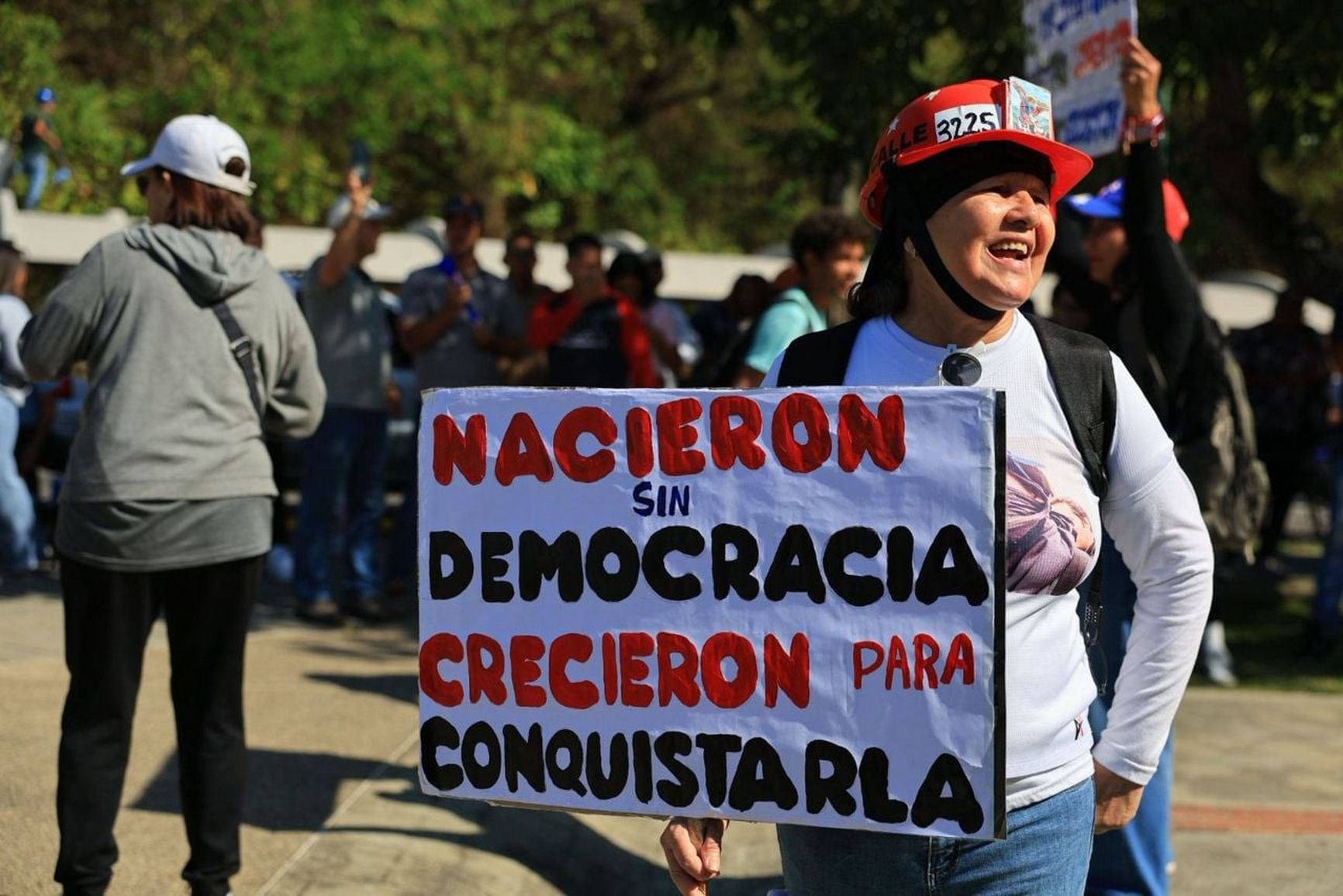
Still, all of the old repressive laws remain in force — among them the 2017 Law Against Hate, which in practice is used to hand dissidents terms ranging from 10 to 20 years for their “incitement to hatred.” There is no rule of law, and no meaningful talk of reforming the security forces, courts, or prosecutors’ offices. Any media outlets not already under the control of government-affiliated businesspeople continue to face censorship, and many news websites remain blocked. One of the key issues is the dissolution of the colectivos and other paramilitary groups created and financed by the Chávez–Maduro regime to exert illegal control over society, intimidate opponents, and carry out repression.
It is also clear that the current Venezuelan authorities seek to prevent Machado's return to the country. On Feb. 12, Delcy Rodríguez warned the opposition leader: “As for her return to the country, she will have to answer to Venezuela — why she called for a military intervention, why she asked for sanctions against Venezuela, and why she celebrated the actions that took place at the beginning of January.”
The United States, meanwhile, appears to view Machado as a backup option for long-term use. The course of events could change if civil society takes to the streets to demand real reforms. In that event, Washington could choose to accelerate Venezuela’s democratic transition.
After his Senate appearance, Marco Rubio met with Machado, calling her a potential ally in a transitional government for Venezuela. However, when asked after the meeting whether she was ready to join a transitional government alongside Delcy Rodríguez, the opposition leader replied: “We are willing and are working to facilitate a real transition. This is not a Russian-style transition where the mafias remain in power.”
Machado stressed that her goal is to restore institutions that guarantee democracy and justice, rather than preserve the ruling regime. She emphasized, however, that the United States was “the only government that risked the lives of its citizens for the freedom of Venezuela.”
Speaking online at the Munich Security Conference on Feb. 14, Machado was even more critical of Delcy Rodríguez: “She knows that the world knows she is part of a criminal structure. She is an essential part of the cartel. She was the architect and overseer of the torture system and the repressive apparatus, and she is the main link to Russia, Iran, and Cuba.” Machado stressed the need for restoring institutions now that “the remnants of the regime are following the orders of the United States.”
On Jan. 8, National Assembly Speaker Jorge Rodríguez announced the first release of political prisoners, raising hopes for rapid change in the country. In reality, however, only nine of Venezuela’s approximately 1,000 potential candidates were released that day — five of them Spanish nationals.
Any subsequent developments have unfolded in a highly opaque manner, with the authorities and non-governmental organizations citing completely different numbers of people released. Delcy Rodríguez accused NGOs of manipulating figures and lying, and at the end of January her brother offered assurances that the lists of those freed were available. However, they were never officially published. In turn, NGOs suspected that the government was inflating the numbers by releasing people who were not actually political prisoners.
According to a report published on Feb. 13 by the non-governmental organization Foro Penal, which provides legal defense for political prisoners in Venezuela, 644 people remain in custody after 431 political prisoners were released in the first month after Maduro’s ouster. Machado, meanwhile, said that 171 military personnel remain imprisoned and that none of them have been released. And in January 2026 alone, another 36 Venezuelans were arrested on political grounds.
Juan Pablo Guanipa, a former governor and lawmaker, was released on Feb. 8 before being abducted hours later by a group of armed men. The next day, prosecutors said he had violated the court’s prescribed precautionary measures and placed him under house arrest. This is far from the only case of a person being re-detained after release, and it only received attention because of the politician’s prominence.
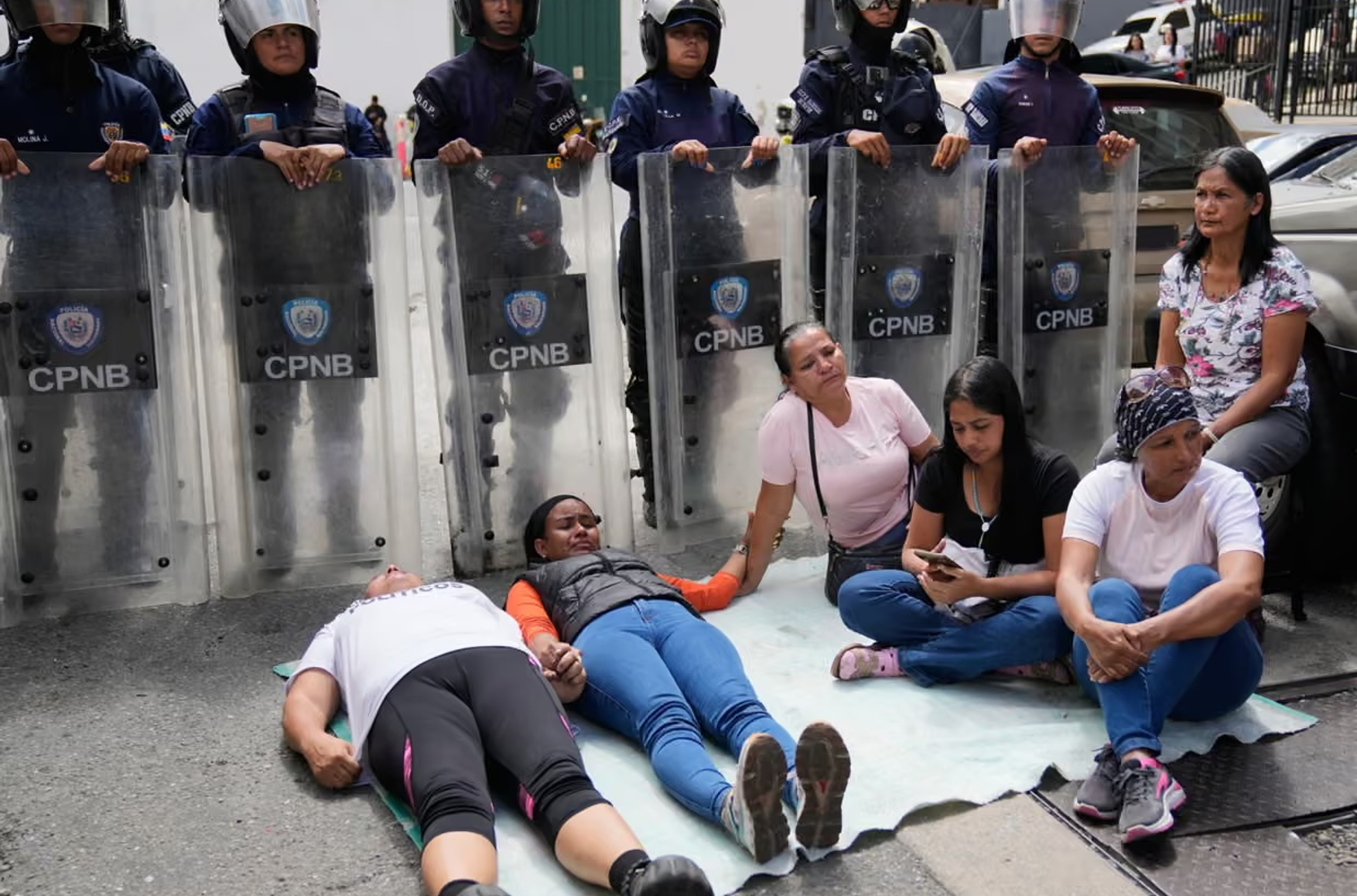
Which is why dozens of prisoners’ family members gather daily outside detention centers with lists in hand, demanding information about those who do not appear in any public records. During the January protests, three mothers of political prisoners died without ever receiving news that their sons had been released.
A left-wing political ideology based on the ideas and practices of Hugo Chávez, president of Venezuela from 1999 to 2013.
An indispensable role in Venezuelan oil production belongs to a light petroleum product called naphtha. Venezuelan extra-heavy crude is too viscous to flow through pipelines on its own, which is why naphtha is used as a diluent, turning the extra-heavy crude into the so-called Merey grade — a Venezuelan oil blend suitable for transportation and export. To maintain production levels, Venezuela needs to import about 80,000 to 90,000 barrels of naphtha per day. It is brought into the country and often blended on site with crude oil, helping move it to export terminals such as the port of José.
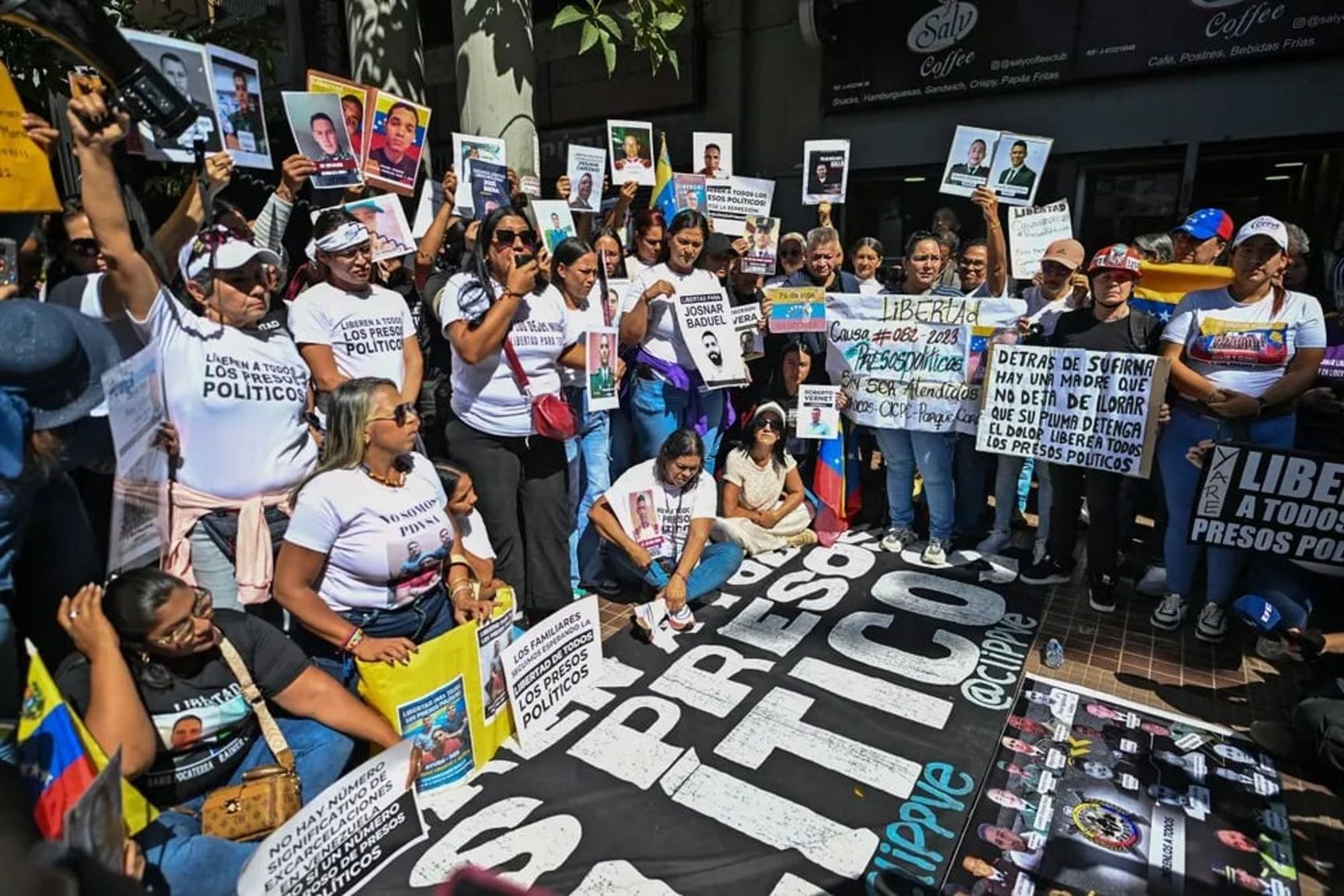
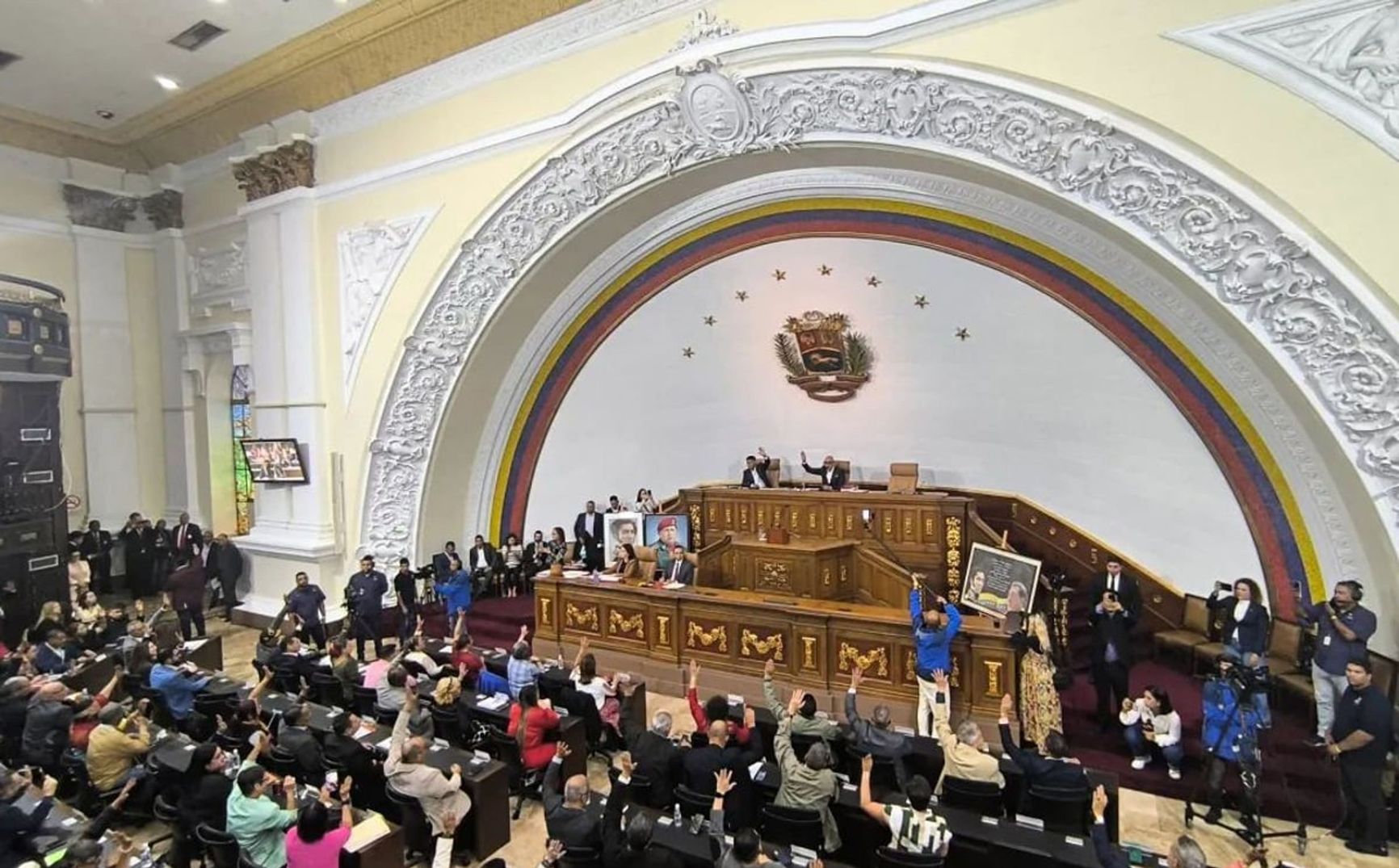
On Jan. 30, Delcy Rodríguez announced a general amnesty bill covering “the entire period of political violence — from 1999 to the present,” starting with Hugo Chávez’s first presidential term. On Feb. 5, Venezuela’s National Assembly unanimously approved in the first reading a law, and the second reading took place on Feb. 10. However, its final approval was postponed due to controversy regarding its scope and the role of the judiciary in its implementation. Diosdado Cabello, Venezuela’s Interior Minister and the Secretary-General of the ruling United Socialist Party (PSUV), stated that “the amnesty law can only be approved by Chavismo, because we have the majority.”
A left-wing political ideology based on the ideas and practices of Hugo Chávez, president of Venezuela from 1999 to 2013.
An indispensable role in Venezuelan oil production belongs to a light petroleum product called naphtha. Venezuelan extra-heavy crude is too viscous to flow through pipelines on its own, which is why naphtha is used as a diluent, turning the extra-heavy crude into the so-called Merey grade — a Venezuelan oil blend suitable for transportation and export. To maintain production levels, Venezuela needs to import about 80,000 to 90,000 barrels of naphtha per day. It is brought into the country and often blended on site with crude oil, helping move it to export terminals such as the port of José.
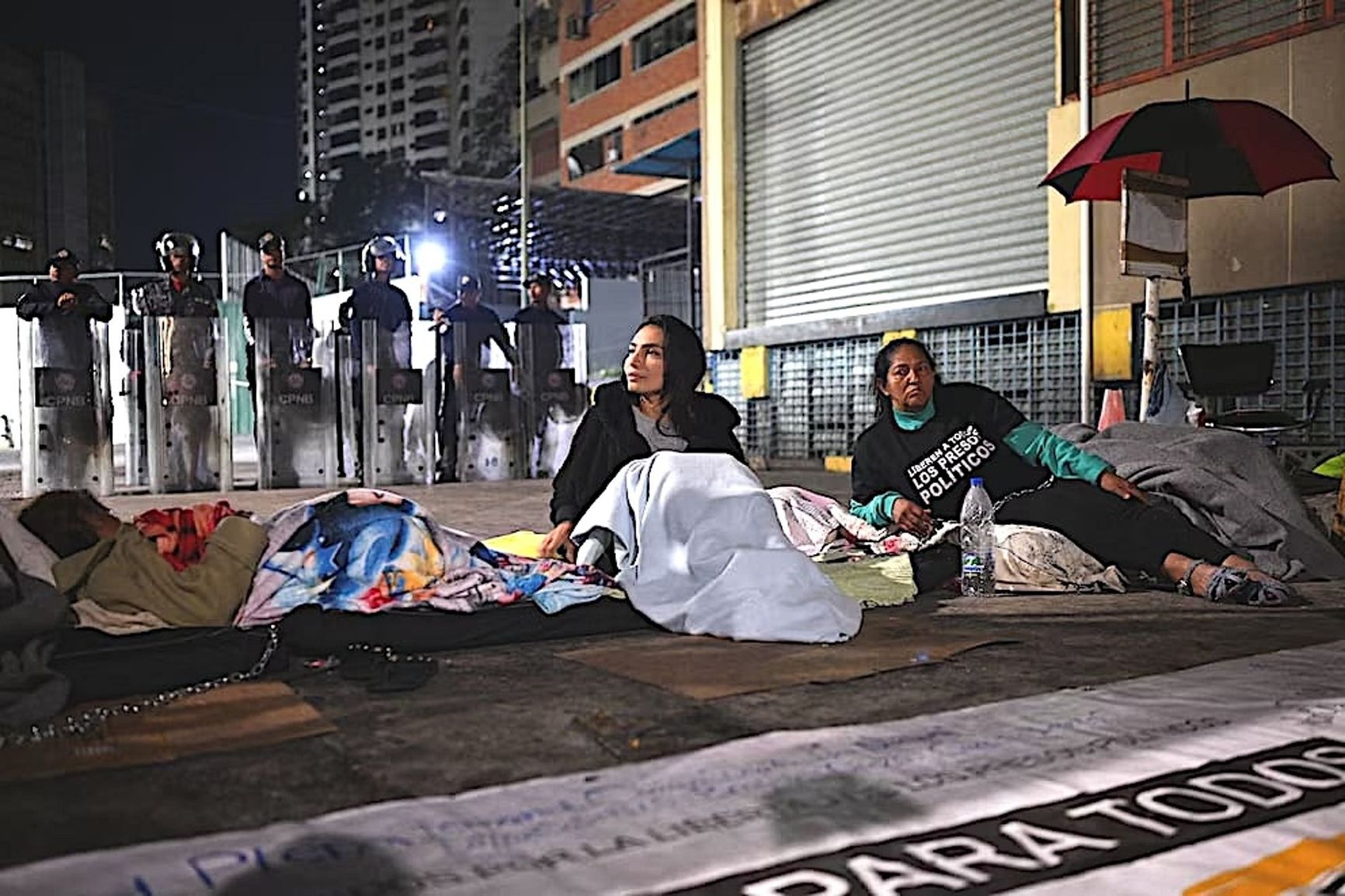
On Feb. 14, after the parliament postponed the adoption of the landmark amnesty law, a small group of political prisoners’ relatives gathered outside a prison in Caracas to join a hunger strike initiated by inmates at the Zona 7 prison.
A left-wing political ideology based on the ideas and practices of Hugo Chávez, president of Venezuela from 1999 to 2013.
An indispensable role in Venezuelan oil production belongs to a light petroleum product called naphtha. Venezuelan extra-heavy crude is too viscous to flow through pipelines on its own, which is why naphtha is used as a diluent, turning the extra-heavy crude into the so-called Merey grade — a Venezuelan oil blend suitable for transportation and export. To maintain production levels, Venezuela needs to import about 80,000 to 90,000 barrels of naphtha per day. It is brought into the country and often blended on site with crude oil, helping move it to export terminals such as the port of José.
Eventually, on Feb. 19, the National Assembly passed the amnesty bill in the second reading. But even this victory in no way signals the democratization of the regime, which appears to be leveraging the release of political prisoners in order to ease international pressure. Moreover, local NGOs say the authorities are operating on a “revolving door” principle, where those released yesterday are quickly replaced in prison by newly arrested individuals.
A left-wing political ideology based on the ideas and practices of Hugo Chávez, president of Venezuela from 1999 to 2013.
An indispensable role in Venezuelan oil production belongs to a light petroleum product called naphtha. Venezuelan extra-heavy crude is too viscous to flow through pipelines on its own, which is why naphtha is used as a diluent, turning the extra-heavy crude into the so-called Merey grade — a Venezuelan oil blend suitable for transportation and export. To maintain production levels, Venezuela needs to import about 80,000 to 90,000 barrels of naphtha per day. It is brought into the country and often blended on site with crude oil, helping move it to export terminals such as the port of José.
К сожалению, браузер, которым вы пользуйтесь, устарел и не позволяет корректно отображать сайт. Пожалуйста, установите любой из современных браузеров, например:
Google Chrome Firefox Safari