POLITICS
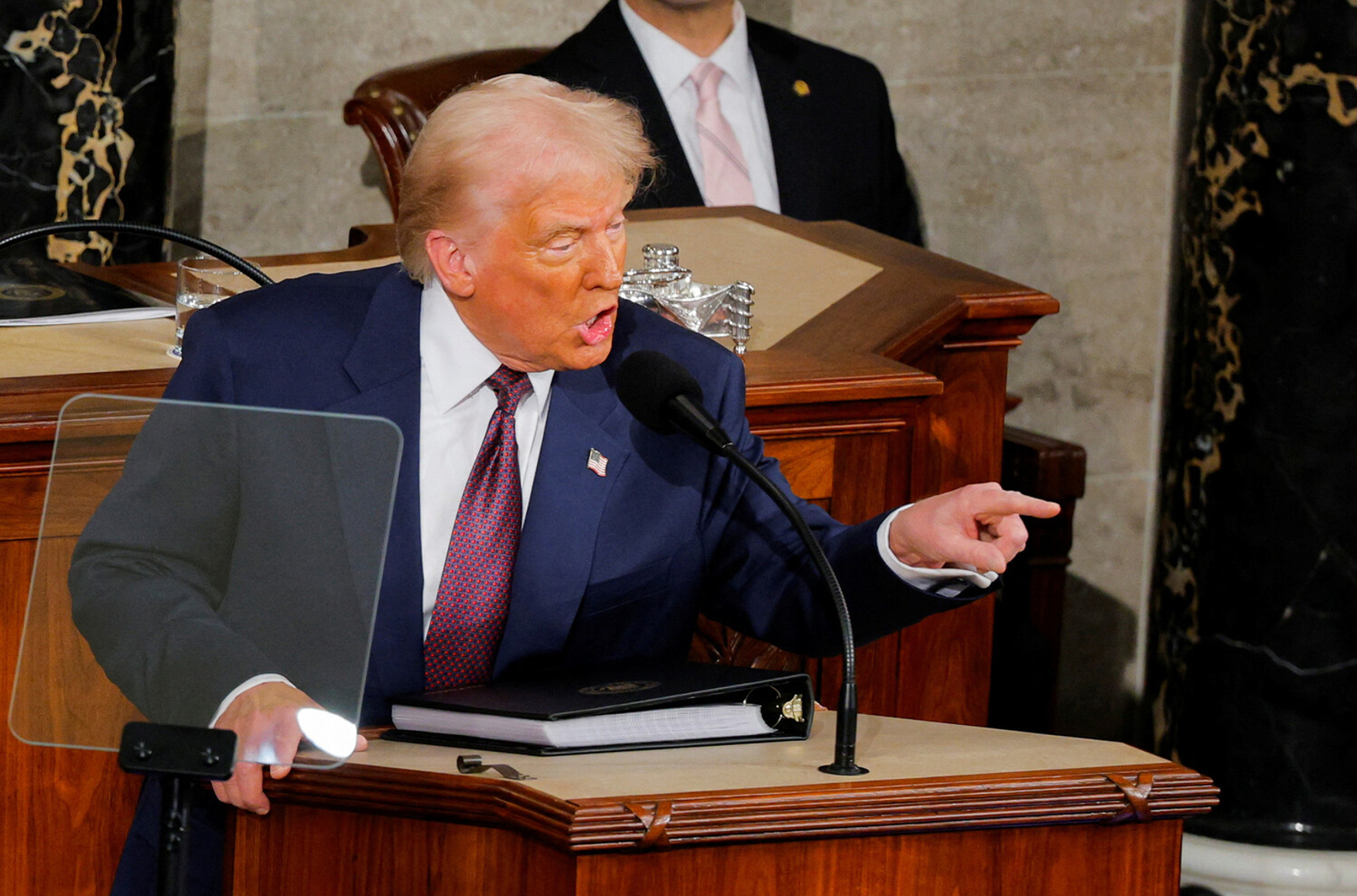
On March 4, the Republican-controlled U.S. Senate rejected a resolution that sought to limit Donald Trump’s authority to conduct military operations against Iran without congressional approval. The document called for halting the operation in Iran that began over the previous weekend, when the U.S. and Israel launched missile strikes against Iranian territory, killing most of the country’s leadership, including Supreme Leader Ayatollah Khamenei. However, the pretext and objective of the attack remain unclear, and the White House has offered conflicting explanations as to its end goals. Republicans are backing the president’s decision despite accusations of illegality from Democrats — and also from some conservatives. More importantly, Trump has so far failed to persuade ordinary Americans of the operation’s necessity. The president has already said, however, that he is not particularly concerned about the results of polls.
In search of a target
Politicians divided
Iranians in favor, Americans against
On Feb. 28, the United States launched Operation “Epic Fury.” Together with the Israeli army, American forces carried out a series of missile strikes on Iranian territory. As a result of these attacks, a number of Tehran’s leading political and military leaders were killed, including Ayatollah Khamenei and several members of his family. According to the Iranian Red Crescent, the total number of people killed exceeded 650.
In response, Iran shelled Israel, along with U.S. military facilities in Iraq, Jordan, Qatar, Kuwait, Oman, Bahrain, Saudi Arabia, and the United Arab Emirates. According to official data, six American service members were killed, and another 18 were wounded. While repelling the Iranian attack, Kuwait’s air defense forces mistakenly shot down three U.S. Air Force F-15 aircraft – the pilots, however, managed to eject.

The military operation was preceded by a series of negotiations in which Washington sought to persuade Tehran to roll back its nuclear program. A day before hostilities began, Oman’s foreign minister Badr al-Busaidi, mediating the talks, said that the sides had even managed to reach an agreement on uranium enrichment. The war began nonetheless. Reports even appeared in the press citing unnamed sources who claimed that the negotiations and their supposed success had merely been a U.S. ruse to distract Tehran.
Be that as it may, any war requires an explanation. Addressing the nation immediately after the start of the conflict, Trump said that Iran’s nuclear program and missile arsenal posed a threat to U.S. national security, calling on the Iranian army to surrender and urging the country’s citizens to seize control of the levers of power: “To the great, proud people of Iran I say tonight that the hour of your freedom is at hand. When we are finished, take over your government. It will be yours to take. This will be probably your only chance for generations.”
A few days later the president addressed Americans again. This time he said the goal of the operation was the destruction of Iran’s missiles and navy, as well as depriving Iran of the ability to develop nuclear weapons and finance terrorist organizations.
Trump also acknowledged the first casualties on the American side. Nevertheless, he emphasized that the fighting would continue while conceding that more deaths were possible. Speaking with journalists, the president once again declared that he would seek a change in Iran’s leadership but gave varying timelines for the operation — anywhere from two to five weeks.
The Pentagon, for its part, said the objective of the attack was specifically Iran’s missile forces and navy, which pose a threat to U.S. military facilities in the Middle East. Secretary of Defense Pete Hegseth personally offered yet another explanation: the strikes were prompted by the collapse of negotiations. At the same time, he said, the United States does not aim to change the government in Iran. “This is not a so-called regime-change war, but the regime sure did change, and the world is better off for it,” Hegseth said.
Secretary of State Marco Rubio then entered the discussion, framing the reason for the outbreak of hostilities somewhat differently. In answer to reporters’ questions after a briefing in Congress, he said the United States had joined Israel’s bombing campaign in order to protect itself. “We knew that there was going to be an Israeli action. We knew that that would precipitate an attack against American forces, and we knew that if we didn’t pre-emptively go after them before they launched those attacks, we would suffer higher casualties,” Rubio said.
However, that version did not last long either, and it was Trump himself who contradicted it, claiming that Iran had been planning to attack the United States. “It was my opinion that they were going to attack first. They were going to attack if we didn’t do it… I felt strongly about that,” the American president said, repeating the same words several times in his characteristic manner. “And based on the way the negotiation was going, I think they were going to attack first, and I didn’t want that to happen. So if anything, I might have forced Israel’s hand,” Trump asserted.
This kaleidoscope of stated reasons and objectives for the military action drew criticism from the Democratic camp.
“There was no imminent threat to the United States of America by the Iranians,” said Democratic Senator Mark Warner, a member of the upper chamber’s Intelligence Committee. “We have seen the goals for this operation change now, I believe, four or five times.”
Even after briefings involving representatives of the Trump administration, Democrats noted that they had not received a coherent explanation. “A whole lot of questions were asked. I found their answers completely and totally insufficient. In fact, at least to me, this briefing raised many more questions than it answered,” said Senate Democratic leader Chuck Schumer.
At the same time, opinions within the Democratic Party about the operation have been divided. Some lawmakers, such as Senators John Fetterman and Mark Kelly, supported the main stated objective — preventing Iran from obtaining a nuclear bomb — and welcomed the news of Ayatollah Khamenei’s death. This faction also speaks about protecting the rights of “ordinary Iranians” from a dictatorial regime.
The critics, however, can be divided into two types. Some pointed out that the White House lacks a clear strategy and that a war aimed at regime change in another country could drag on indefinitely while leading to unpredictable consequences. “Everything I have heard from the administration before and after these strikes on Iran confirms this is a war of choice with no strategic endgame,” said Jim Himes, the top Democrat on the House Intelligence Committee.
Other critics insisted that the president had no right to strike Iran without the consent of Congress, which under the Constitution holds the exclusive authority to declare war. Senator Bernie Sanders accused Trump of waging an “illegal, premeditated, and unconstitutional war” by bypassing the legislative branch.
This argument even resonated with several Republicans. Conservative Congressman Thomas Massie, who had already criticized Trump on issues from trade tariffs to delays in releasing the Epstein files, wrote: “I am opposed to this war. This is not 'America First.'”
In the Senate, a bipartisan resolution limiting Trump — proposed by Republican Rand Paul and Democrat Tim Kaine — has already failed. Fifty-three members voted against the restrictions, while only 47 supported them. The day before, Paul said that Congress must control the use of the armed forces and that he personally was “against another presidential war.”
Among Republicans in the Senate, Susan Collins and Lisa Murkowski had been expected to join him. After all, they had previously supported a similar resolution regarding Venezuela and have shown more willingness than most of their co-partisans to go against Trump. In the end, however, Rand Paul remained alone among Republicans, while one Democratic senator — John Fetterman of Pennsylvania — backed the president and his war.
The same scenario repeated itself in the House of Representatives. It was no coincidence that Republican conference leader Mike Johnson said his fellow party members had enough votes to block the bill, which he called a “dangerous gambit” by the Democrats.
“The idea that we would take the ability of our commander in chief, the president, take his authority away right now to finish this job, is a frightening prospect to me,” Johnson said. According to him, the White House has every right to conduct military action, since this is self-defense rather than a declaration of war. Senate Republican leader John Thune spoke in a similar vein, saying that the president has the authority to conduct hostilities for 60 days without congressional approval.
Given the balance of power in the House of Representatives, as well as Trump’s support in this war from a number of Democratic lawmakers, such initiatives currently have no chance of passing in either chamber. Even if the resolution were adopted, however, its effect would be largely symbolic — Trump would almost certainly veto it, and overriding that veto would require an impossible-to-achieve two-thirds of the vote in both the House and the Senate.
However, the situation could change over time. Despite the near-unanimous support for the strikes on Iran among Republican lawmakers, dissatisfaction with White House policy is beginning to emerge within the conservative camp. Former Fox News host Tucker Carlson, who regularly meets with Trump at the White House, called the strikes on Iran “absolutely disgusting and evil.” In response, Trump said that Tucker had “lost his way” and was no longer part of the MAGA movement. Republican Marjorie Taylor Greene, who recently left Congress under pressure from the president, went even further, accusing Trump of betraying the MAGA movement and calling his administration a “bunch of sick fucking liars.”
Republican Marjorie Taylor Greene called Trump’s team a “bunch of sick fucking liars,” accusing the president of betraying MAGA
Representatives of the intellectual core of the conservative movement — which played a major role in Trump’s election to a second term — are also dissatisfied. Kurt Mills, editor of the influential American Conservative magazine argues that Trump has morphed from an anti-globalist into an “imperial president.” “Now it just seems overt. The administration serves rich people and does wars for foreign countries,” Mills lamented.
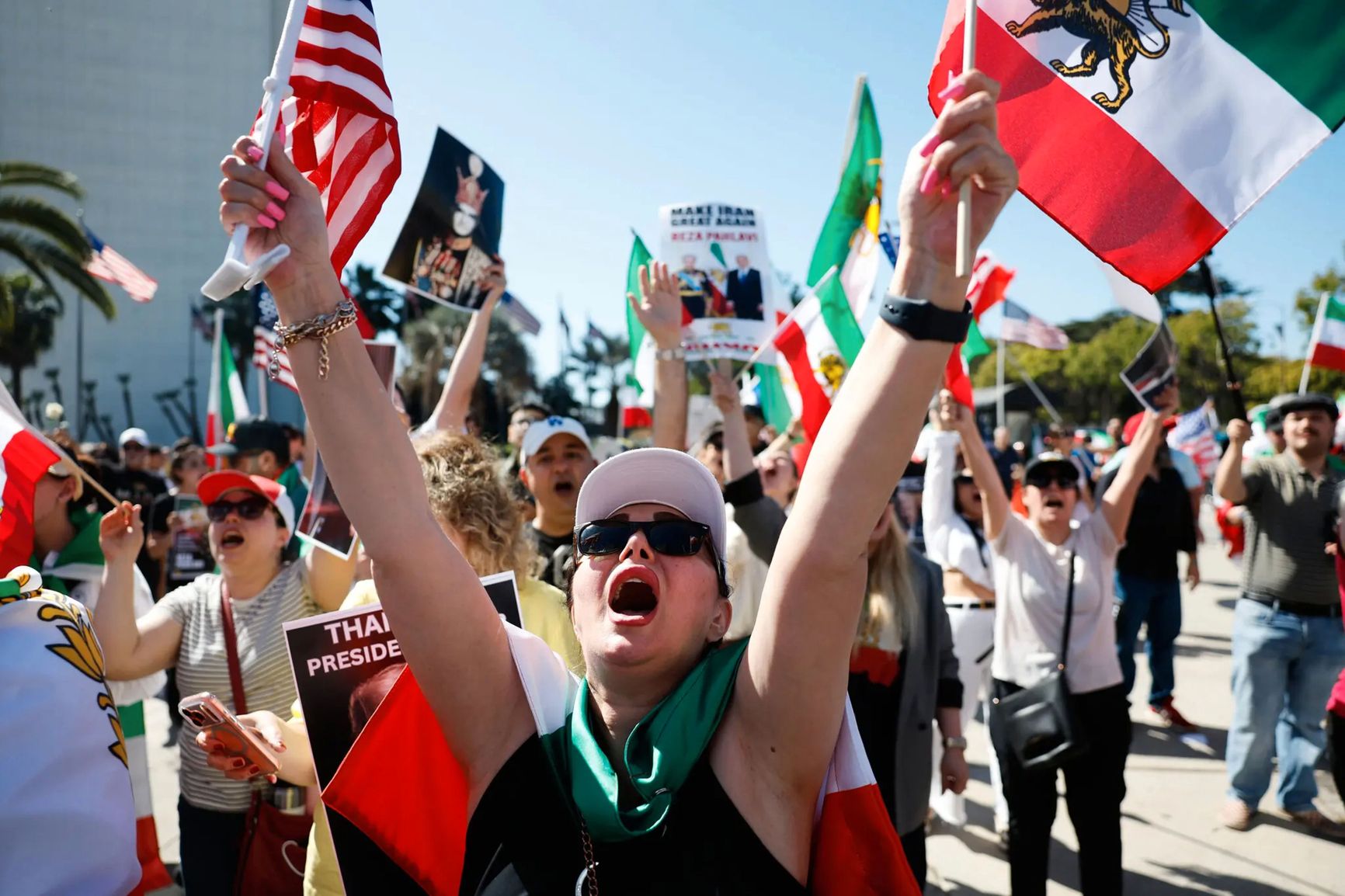
News of the operation also divided ordinary Americans. The reaction of the Iranian diaspora in the United States — more than 400,000 people, many of whom fled the country after the 1979 Islamic Revolution due to religious and ethnic persecution — was overwhelmingly positive. In Los Angeles, where more than 150,000 people of Iranian origin live, hundreds of demonstrators took to the streets. Some carried flags from the era of the shah’s rule, singing and dancing at the news of Ayatollah Khamenei’s death.
Similar rallies took place in Washington, New York, San Francisco, Portland, and Houston. But at the same time, some people who still have friends and relatives in Iran received the news of the strikes with concern, worrying about the safety of their loved ones.
In addition, equally large antiwar rallies took place in New York, Chicago, Philadelphia, Atlanta, Minneapolis, and Boston, to name but a few. The demonstrations were organized by the movements “50501” and Code Pink, which had previously staged a series of No Kings protest actions that mobilized critics of the Trump administration.
Polls conducted immediately after the strikes on Iran began show that Americans are fairly skeptical about the White House’s decision. In a Reuters/Ipsos survey, only 27% of respondents approved of bombing Iran, while 43% opposed it. Among Republicans, 55% supported the strikes, but 42% said they would be less likely to back the attacks if American service members were injured or killed.
Only 27% of Americans approved the bombing of Iran, while 43% opposed it
More recent studies show similar results. For example, in a poll conducted for CNN, 41% of respondents approved of the military action, while 59% disapproved. Among Democrats, 82% disapproved, compared with 68% of independents and only 23% of Republicans. The same distribution appeared in responses to the question of whether people doubt that the president has a clear plan of action regarding Iran.
According to a Washington Post poll, 39% of respondents approved of Trump’s decision to attack Iran, while 52% did not support it. At the same time, only 25% believe the United States should continue the bombing, while 47% would like it to stop. Among those surveyed, 74% fear that the conflict could escalate into a full-scale war.
The poll also showed that respondents do not share a single view about the reasons for the Iranian operation. According to 14%, it was a demonstration of strength, 12% see it as an attempt to change the ruling regime, another 12% believe it is meant to help the Iranian people, and 9% are convinced the goal is to stop Iran’s nuclear program. Nearly 20% agree that the matter concerns some combination of money, oil, and an attempt to distract attention from the Epstein case, while 13% do not understand the White House’s goals at all.
Judging by these figures, the Trump administration has so far failed to persuade Americans of the need for a military operation in Iran. Despite months of rising tensions between Washington and Tehran, the president was unable to offer a widely accepted justification for his aggressive policy.
The various contradictory narratives coming from Trump, Hegseth, and Rubio have not made any of this clearer for ordinary Americans. As a result, it is mainly Republicans who trust the White House, as they are ready to support any decision made by the president.
Trump himself, however, does not appear particularly concerned about the lack of consent from the majority of Americans. “I think that the polling is very good, but I don't care about polling. I have to do the right thing. This should have been done a long time ago,” he said.
The president clearly has no intention of stopping the war under pressure from Congress, let alone out of concern for public opinion. Moreover, Trump may be counting on the possibility that attitudes will change by the time of this year’s midterm congressional elections — provided that he achieves a demonstrable victory in Iran.
К сожалению, браузер, которым вы пользуйтесь, устарел и не позволяет корректно отображать сайт. Пожалуйста, установите любой из современных браузеров, например:
Google Chrome Firefox Safari